

(For Illustrative Purposes Only)
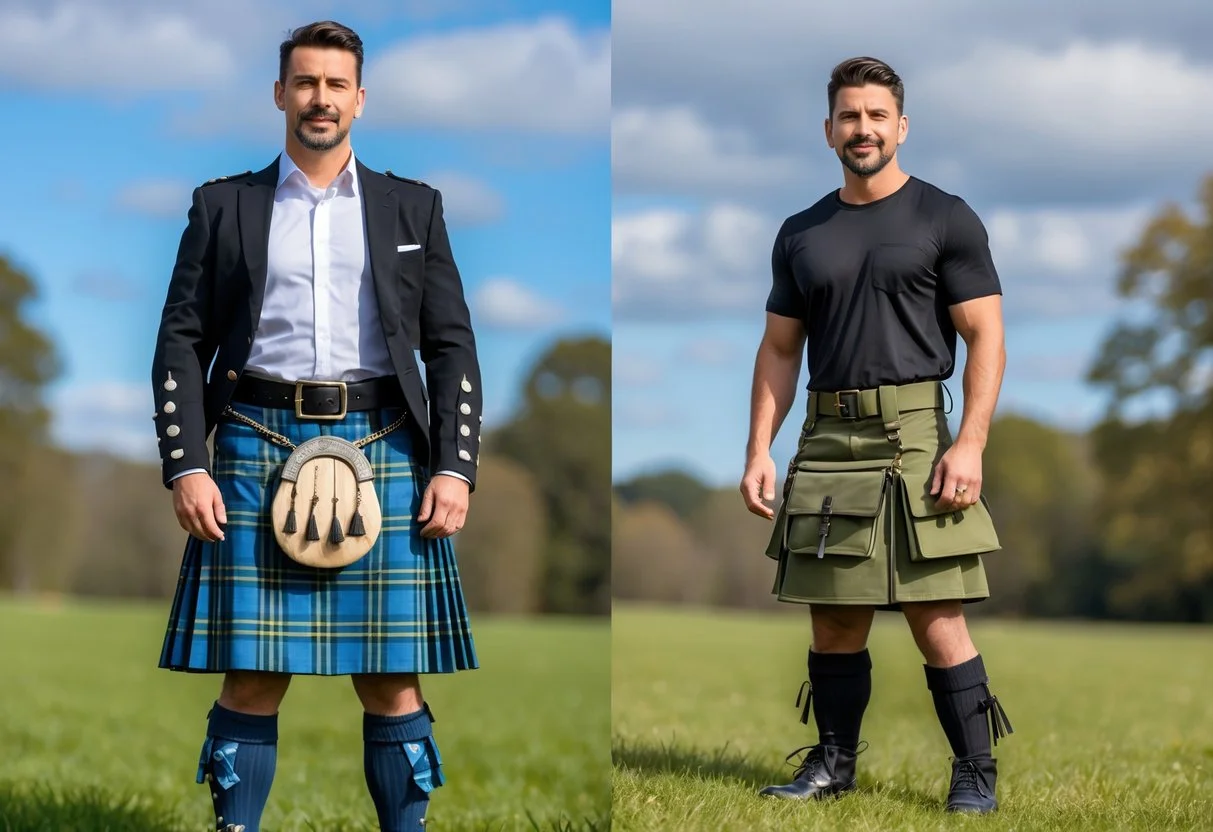
Traditional kilts are an intrinsic part of Scottish heritage and culture, typically fashioned from tartan wool and worn on special occasions. Utility kilts, however, are modern versions intended for everyday use, constructed from sturdy materials such as polyester or denim for comfort and practicality.
The difference mainly is that traditional kilts are all about culture and fashion, and utility kilts are about utility and practicality. They’re both sort of like pleated skirts, but they’re not made of the same material, and they don’t serve the same purpose.
This distinction helps men choose whether they need to wear the kilt for a formal occasion or day-to-day work like a dress.
Knowing these subtleties can help us make a good decision and appreciate each type.
Understanding Traditional and Utility Kilts
(For Illustrative Purposes Only)
Kilts come in different styles that serve distinct purposes. Some focus on tradition and heritage, while others prioritise practicality and modern use.
What is a utility kilt?
A utility kilt is a modern, practical variation for men with jobs or duties like Jocks, who care for a group of tweens; Vince the Mailman; and Tony the Italian Hairdresser, who wear kilts for exercising.
Unlike traditional kilts, utility kilts are used as a work kilt or for casual wear. These are typically made with heavier, more resistant material of around 18 oz.
Kilts are more comfortable to wear than pants or shorts. That makes them favourites for people who work outdoors, including carpenters and hikers, and anyone needing comfort and mobility.
There are many utility kilts available in the UK and elsewhere for those who like the kilt look without the formal nature.
History of the Traditional Kilt
The traditional kilt, also called the Scottish Highland kilt or tartan kilt, has been around for centuries.
It was developed from the great kilt, a full-length garment whose upper half could be worn as a cloak draped over the shoulder or brought up over the head and whose lower half could serve as a blanket.
The good old traditional kilts have lots of cultural and historical significance, and they represent your family or clan in terms of their tartan patterns.
They are typically constructed from a lighter wool and barely have pockets. Contemporary kilts are a modern item worn at events and are cute and fun when worn by children at such events.
Primary Types of Kilts
The two primary categories of kilts are the utility kilt and the traditional kilt. In addition to these, there are speciality kilts, such as the carpenter’s kilt, a kind of utility kilt made especially for work and equipped with numerous tool pockets and reinforced fabric.
| Kilt Type | Material | Features | Use Case |
| Traditional Kilt | Wool (Tartan) | Clan patterns, no pockets | Formal wear, ceremonies |
| Utility Kilt | Heavy-duty cloth | Pockets, durable fabric | Work, casual, outdoors |
| Carpenter’s Kilt | Reinforced cloth | Extra pockets, tough | Manual labour, trades |
Key Differences Between Traditional and Utility Kilts
(For Illustrative Purposes Only)
Materials and Construction
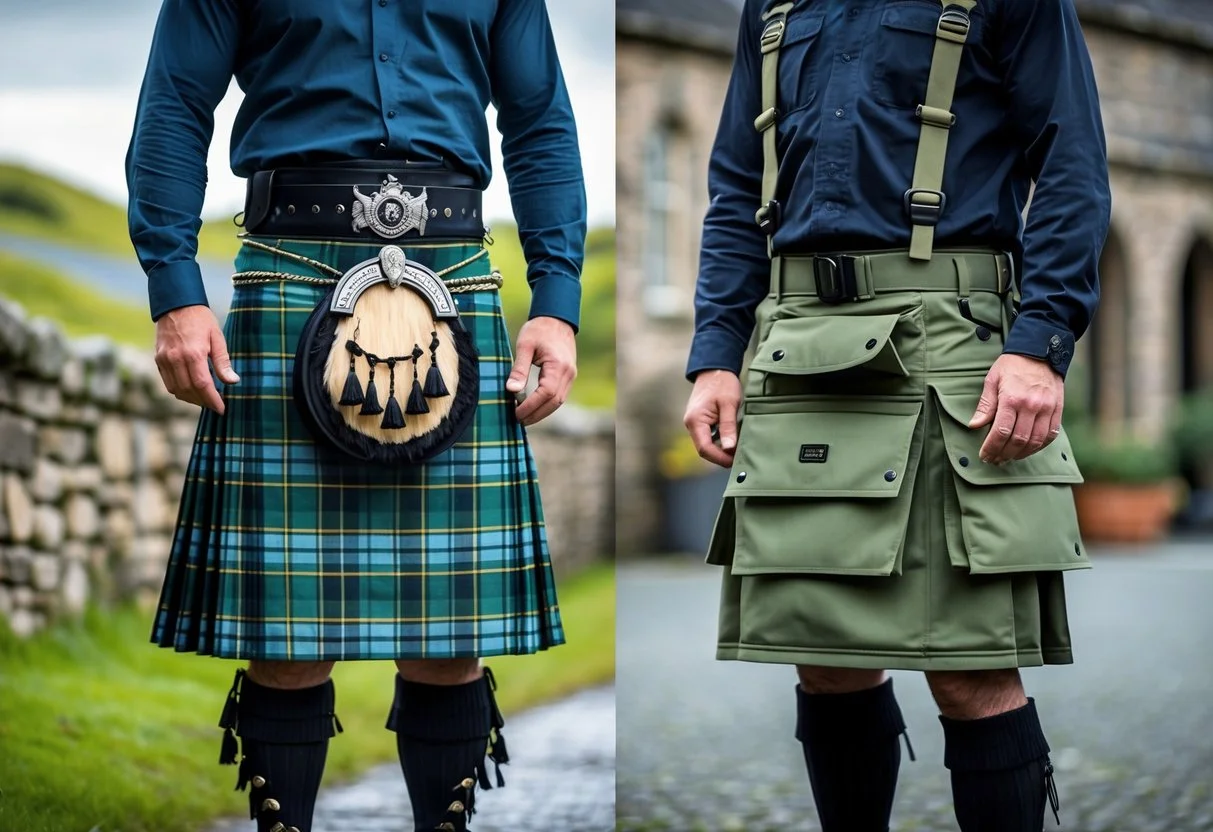
Kilts are usually made of heavy wool in tartan. It’s thick and warm and comes with the classic Scottish patterns that embody heritage. The weight and texture of the wool provide a formal appearance for standard kilts.
“They feature heavier, thicker, more durable fabrics – generally 18 oz. cotton, canvas, or denim with many pockets – even though the kilt was not made the way a kilt is made. These are more rough and tumble and thus designed for wear at work or in more active environments.
For instance, A carpenter’s kilt is built with strengthened stitches and heavy material to get down and get physical in.
Design and Features
Classic kilts are pleated at the back and made of a tartan-patterned cloth. They rarely include pockets. The look is all about heritage and ritual.
Utility kilts maintain the pleating but add functional elements such as abundant pockets, a belt loop or loops, and sometimes the addition of belt loops.
These kilts can come with Velcro or snap closures so that it is easy and fast to put on. This makes it excellent for work kilts, where ease of accessibility is great.
Weight: It depends on weight, too; a utility kilt is usually heavier in feel because of the thick fabric, which is permanent and stronger as well. The device flirts with classic form and contemporary function.
When to Wear: Traditional vs Utility Uses
Traditional Scottish kilts are mostly worn at formal occasions such as weddings, Highland games/gatherings, and occasions of official nature. Combine them with dress shirts and jackets, as well as ghillie brogues, for a complete traditional look.
You can wear utility kilts every day, at work, on the job, or at parties, hiking and fishing.
A kilt for work, or a carpenter’s kilt, offers mobility and places to put things and is favoured among tradesmen or CITs. They look great with casual tees, boots or coats.
Styling a Utility Kilt Outfit
Casual & semi-functional wear Utility kilts can be worn for day-to-day as well as semi-casual use. Worn with a basic tee or polo, it makes for a casual, modern look. Boots and belts add ruggedness.
Some don utility kilts with hoodies or jackets, and the look is right for anything from outdoor work to a night out.
Most importantly, while a standard kilt demands specific accoutrements such as the sporran or the kilt pin, utility kilts offer the freedom to mix and match.
That makes them a great alternative for men seeking a more pragmatic but no less fashionable piece.
There are important ways a kilt is to be worn; regardless of the style, it should fit well and be worn at the right height.
Frequently Asked Questions
What is the basic difference in the design of a traditional kilt against a utility kilt?
Common traditional kilts feature pleats in front of the body with a full tartan pattern, a standard length and no pockets. Utility kilts bear the same appearance, but the differences lie in the pockets, design, and usage of straps, and they have consequently modern standards.
How is the material of utility kilts different from that of traditional kilts?
In traditional kilts, these are made from a lighter tartan woven wool. The thicker, heavier-weight materials, such as 18 oz and heavy drill, are chosen to ensure that the utility kilt you buy lasts all year, season after season.
Can you wear a utility kilt formally, or are they just for casual wear?
Utility kilts are born more for casual or workwear. At formal occasions, traditional kilts are worn, as they do not create inconsistent patterns or designs.
A few designs feature both solid colours, such as that of the Scottish national tartans, and tartan patterns; they are more formal, and there are fewer substitutes for the great kilt, which is used for ceremonial dress.
What are some practical benefits of the utility kilt (over the traditional kilt)?
Utility kilts provide more airflow, freedom of movement, and, hey, pockets. They’re good for working out, going outside, or just hanging out.
All-out kilts are more ceremonial and stylish than utilitarian.
What is the difference in maintenance and care for utility kilts as compared to traditional kilts?
Wool kilts are usually dry-cleaned or laundered to prevent shrinkage. For utility kilts, you might find them easier to wash because their material is more rugged.
Of course, utility kilts require less special care and can be more durable for everyday wear.
What are the accessories combined to wear the utility kilt when compared to the traditional kilt?
Formal accessories such as sporrans, kilt pins and jackets are worn with traditional kilts. Utility kilts generally have less ornate decorations, with functions and pockets being prioritised.