

The Black Watch tartan is one of Scotland’s best-known emblems. It’s deep blue and green weave recalls the nation’s military history.
Originating in the early 1700s, the pattern first appeared on the uniforms of Independent Highland Companies that later formed the 42nd Royal Highland Regiment, popularly called the Black Watch.
As years passed, other Highland regiments adopted the design, and historians and loyal fans began referring to it as the Government’s tartan.

(For Illustrative Purposes Only)
Presently, the Black Watch tartan is recognised far beyond the ranks of Scottish regiments; it now appears on modern garments and in popular culture everywhere.
Whether a person cherishes heritage or is attracted to the fabric’s timeless pattern, the cloth carries a narrative that is tightly woven with Scotland’s past and national character.
This article on the origin and formative years of the Black Watch explores its beginnings and early applications in depth.
Origins of the Black Watch Tartan
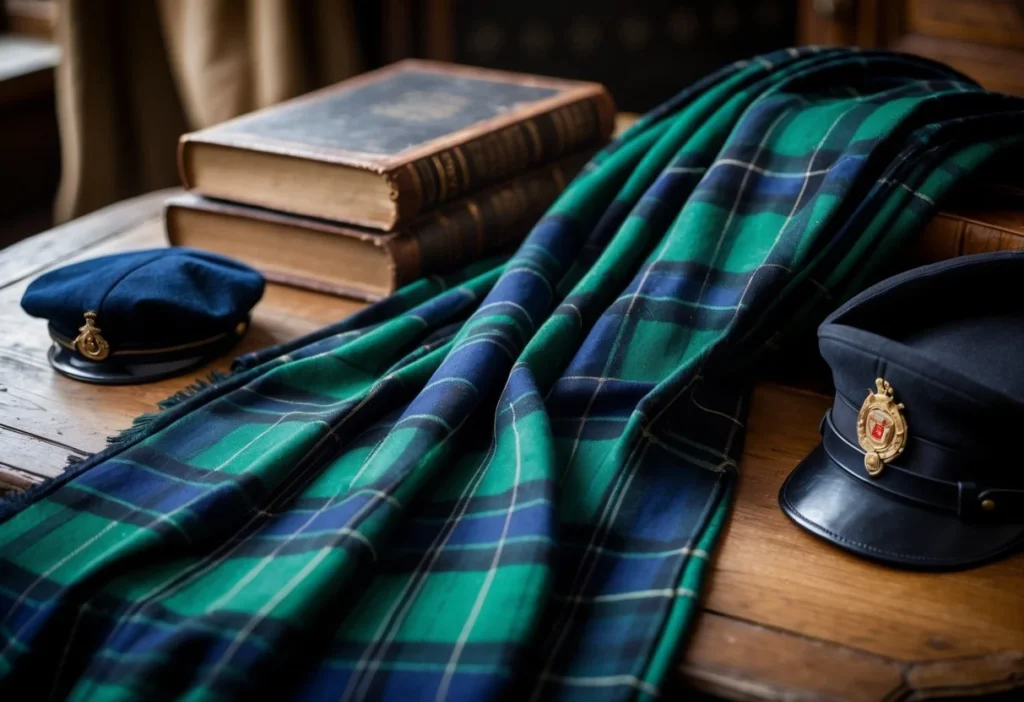
(For Illustrative Purposes Only)
For centuries, Scots have woven tartan cloth, with different towns and families producing patterns all their own.
Yet long before the 1700s, those patterns were not tied to clans in the rigid way many people picture them today. Instead, early designs changed with the place, the dyes on hand, and the skill of local weavers.
The notion of clan badges stitched into the cloth gained traction much later. In the early 1700s, tartans expressed regional pride far more than familial ties.
Plain, hard-wearing colours had practical roots; they helped wearers vanish into moor and heather. Many Highlanders, therefore, chose muted plaids that matched the rough landscape around them.
Documents from that time hint that what would become the Black Watch pattern was one of the earliest designs linked to government service.
Its blend of dark green, navy and black was both low-profile and unmistakable, marking soldiers out without the flash of brighter regional cloths.
Formation of the Black Watch Regiment
The Black Watch regiment was raised in 1725 by the British government to patrol the Highland valleys and to restore order in the wake of the Jacobite rebellions.
To fill the ranks, the Crown enlisted steadfast Highland clansmen into Independent Companies that were later styled the Black Watch.
These troops were the first to don the now-famous Black Watch tartan. The dark navy, forest green, and black over-check fabric blended well with the Highland scenery, giving the soldiers a cohesive, field-ready look.
The pattern thus became the military benchmark for tartan, setting it apart from the looser, everyday garb of the Highlands.
As the regiment secured its place in British army legend, its distinctive tartan enjoyed equal renown and respect.
Naming and Meaning
The term Black Watch is believed to originate from the dark palette of the regiment’s tartan and from the vigilant sentry work they performed. Here, black signified the uniform’s colour, while the watch captured their task of maintaining order across the Highlands.
The tartan’s rich blend of blue, green, and black stripes left a striking visual mark. To most observers, it came to represent the discipline and cohesion of the troops.
Over time, that link deepened, and the pattern was officially adopted as the Black Watch Regiment’s tartan before eventually becoming part of the Royal Regiment of Scotland.
Evolution and Cultural Impact
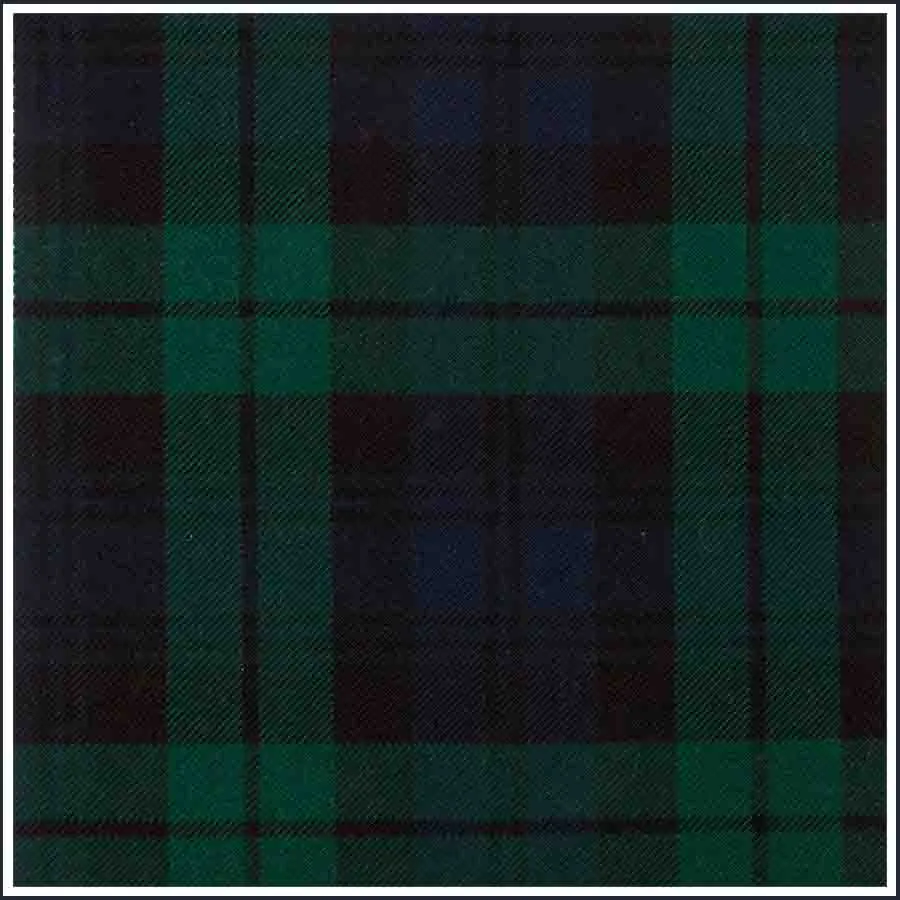
Military Significance
The Black Watch tartan is firmly anchored in military history.
First worn in the eighteenth century by the Black Watch regiment, the pattern signalled both unity and discipline among the troops.
Its dark green, blue, and black bands mimic the Highland terrain, offering a rudimentary camouflage when the soldiers moved through rugged scenery.
That distinctive checkered fabric soon got tied to the name and honour of the Highland regiments. The Black Watch pattern, worn on days off or at the front line, clearly marked them and fed their tough, loyal legend.
Wherever the battalion marched within the British Empire, allies and enemies alike came to see the dark tartan as a badge of Scottish fighting power.
Integration Into Scottish Identity
Through the centuries, the Black Watch tartan transformed from a regimental pattern into a symbol of Scottish heritage.
Once confined to the ranks, the cloth slowly found its way into everyday wardrobes.
Before long, it appeared at Highland games, cultural festivals, and even private family gatherings. The design now stands for more than military service; it speaks to a shared way of life.
Modern Variations
Today, Black Watch tartan has moved far past its military and folklore roots and settled comfortably in everyday style.
Designers apply the check to everything from formal kilts to street-casual jackets, scarves, throws, and even tailored suits.
Its sober palette and quiet elegance appeal to anyone who wants an unshowy look packed with heritage.
The pattern has also entered punk scenes, bridal tailoring, and corporate logos, each time bending to new ideas.
Variations pop up regularly, tweaked in colour or scale so the fabric feels fresh while keeping its old spirit.
Black Watch Tartan in Everyday Life

(For Illustrative Purposes Only)
Fashion and Textiles
Today, countless wearers choose Black Watch tartan simply because its deep green, navy, and black hues pair easily with most other shades.
Tailors cut the cloth not only into kilts but also into trousers, skirts, shirts, and even full Black Watch tartan dresses.
As a result, the pattern appears in many school uniforms and winter outerwear; people deem it both time-honoured and quietly elegant.
Black Watch Tartan Kilt and Accessories
Pulling on a Black Watch tartan kilt remains one of the easiest ways to display Scottish pride, whether at a wedding, graduation, or lively ceilidh.
Because the pattern has deep military roots, several regiments and police units also wear it, honouring the cloth’s lengthy service history.
The Black Watch tartan tie itself is a favourite with both men and women, sitting smartly with suits or blazers whenever a nod to heritage feels right.
Legacy and Influence Beyond Scotland
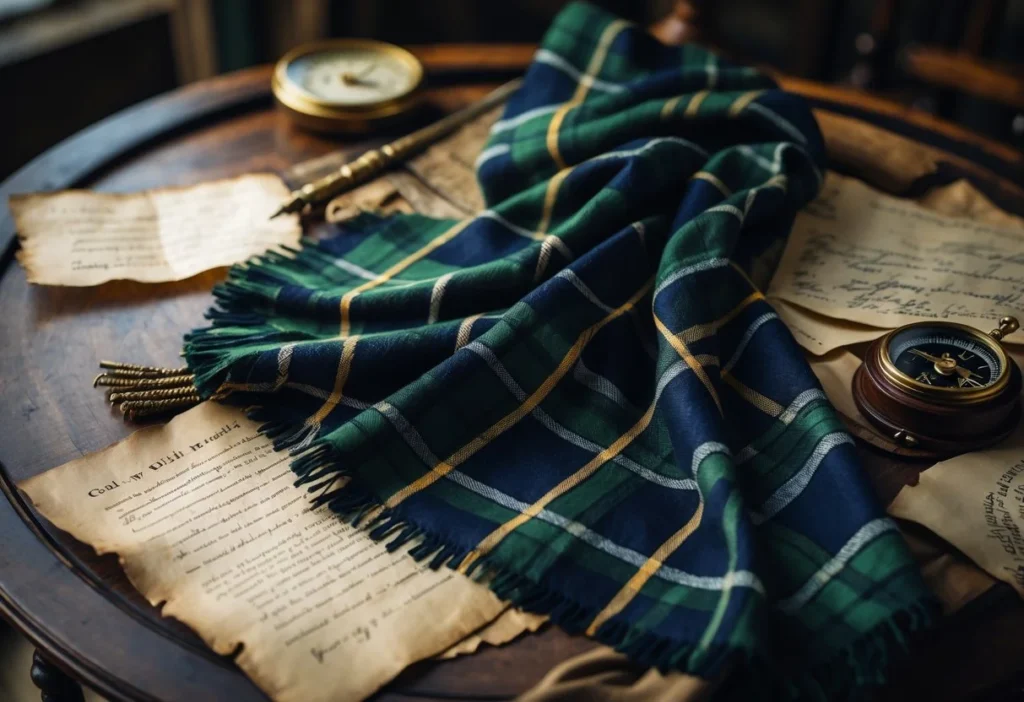
(For Illustrative Purposes Only)
Adoption Around the World
The Black Watch tartan- commonly dubbed the government tartan or Black Watch plaid- has grown into one of the world’s most instantly recognisable cloth patterns.
Its deep green, navy, and black bands appear on uniforms, evening wear, and streetwear sold by retailers in the United States, Canada, Australia and New Zealand.
Throughout North America, people of Scottish descent wear the Black Watch at Highland Games and ceilidhs as a flag of ancestral pride.
Numerous police forces and military regiments beyond Scotland have similarly adopted the cloth, chiefly for parade dress and honour guards.
Museums and Scottish societies overseas display the tartan to teach visitors about its dual military legacy and cultural roots.
Comparison With Other Tartans
The Black Watch pattern catches the eye with its tidy mix of dark green and navy, a quieter scheme when set beside the vivid red-and-black patterns such as Royal Stewart. Though people often treat the Black Watch as a neutral cloth that isn’t tied to one clan, many of the red-and-black tartans carry clear family or royal stories.
That understated look has let Black Watch cross borders, dressed groups far from Scotland who need something sharp yet low-key. Designers, too, reach for it more often, seeing in its calm check the kind of elegance that works anywhere clothes do.
Frequently Asked Questions
What is the origin of the Black Watch tartan?
The Black Watch tartan traces its beginnings to the early 1700s, when Highland independent companies were summoned to restore order in the wake of the Jacobite risings.
These local troops donned the distinctive pattern as an informal uniform. The cloth became standardised in 1739, when the British Army officially formed the Black Watch regiment, marking it the first recorded military tartan used by the state.
Can anyone wear the Black Watch tartan, or is it restricted to certain groups?
The Black Watch tartan is often called a universal or government tartan, set apart from clan-specific designs. Because it lacks restrictions linked to bloodline or name, any soldier or civilian, Highlander or tourist-can wear it freely.
How has the Black Watch tartan evolved?
Originally, the tartan was woven as a belted plaid in a dark blue and green check that blended with the hills.
Over centuries, the basic pattern has endured, yet advances in spinning and dyeing now give the cloth sharper colours and a lighter drape.
In what ways has the Black Watch regiment influenced the popularity of its associated tartan?
The Black Watch regiment catapulted its signature tartan into the public eye through both military service and its standing in Scottish culture.
When soldiers marched in the distinctive check, people linked the pattern to courage, discipline, and loyalty.
Over time, this association spurred demand for both official uniforms and civilian kilts featuring the design.
Are there any controversies surrounding the wearing of the Black Watch tartan?
Questions have arisen over whether the tartan should be reserved for those tied to the regiment or the British establishment. Essays and blogs debate its use by civilians with no military link.
Even so, few formal rules limit wear today, and public opinion regards it as far less contentious than some clan patterns.
In Scotland, the Black Watch tartan adorns kilts, plaids, sashes, and hose. It suits both military regalia and civilian events, including weddings and Highland games.