
(For Illustrative Purposes Only)
The belted plaid, or great kilt, is a traditional Scottish garb that can be traced back to the late 16th century at least.
It typically measures about 7 yards (6.4 meters) in length and 54 to 60 inches (140 to 150 cm) wide. The upper section could serve as a cloak or hood in inclement weather, and the lower as a pleated skirt gathered at the waist.
This item of clothing was widely worn by Scottish Highland men who resided in the countryside and were less affluent, and it served as an integral daily garment. Because of its size and design, it served many functions: clothing, shelter, and even a blanket.
The Great Kilt is not simply a garment but rather an important expression of Scottish identity, depicting the rich culture and perseverance of the Highland people.
Features and Origins of the Great Kilt
(For Illustrative Purposes Only)
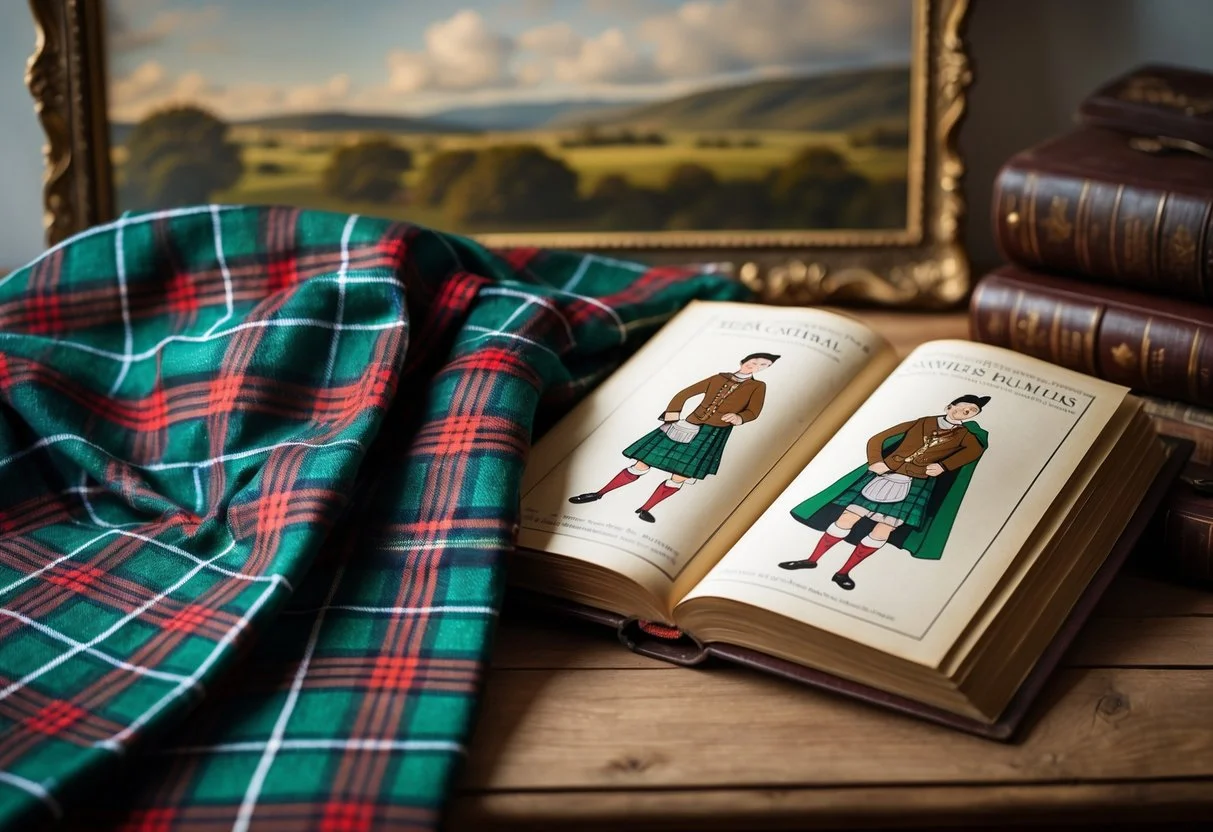
The Great Kilt is a unique garment with specific characteristics that set it apart from the modern kilt. Its size, fabric, and design reflect both practical needs and cultural traditions of the Scottish Highlands. The garment’s background reveals how it evolved and why it remains a symbol of Scottish heritage.
Historical Evolution and Early Use
The Great Kilt is believed to have been constructed in the 16th century from the earlier style of cloaks known as ‘brats’ or ‘plaids’. Gaelic Highland and occasionally also Irish warriors would don these mantles.
The skirt was made into something more practical for walking and heavy physical work by cutting a U shape in front and back, as well as adding pleats and a belt.
It is first mentioned in writing in 1594, although iconographic evidence indicates that it was likely already being used. As everyday wear, in the oral tradition of Gaelic glens with which they were contemporary and blended, great kilts were general to Highland clans into the 18th century. It stood for both identity and durability, especially in Scotland’s harsh climate and mainstream.
Materials, Construction, and Tartan Patterns
The Great Kilt was effectively handmade with thick, handwoven wool. It was frequently patterned with tartan, identified with various clans or regions. These were constructed from two breadths of material that were sewn together to produce the length required.
Every item of clothing that I owned was handmade, embroidered from the backside, being worked on and so on, folded in pleats and belted very carefully to hold its place. Its weight and length made it dual-purpose as clothing and as a blanket, ideal for the Highland conditions.
Cultural Role and Lasting Impact
(For Illustrative Purposes Only)
Symbolism in Scottish Identity
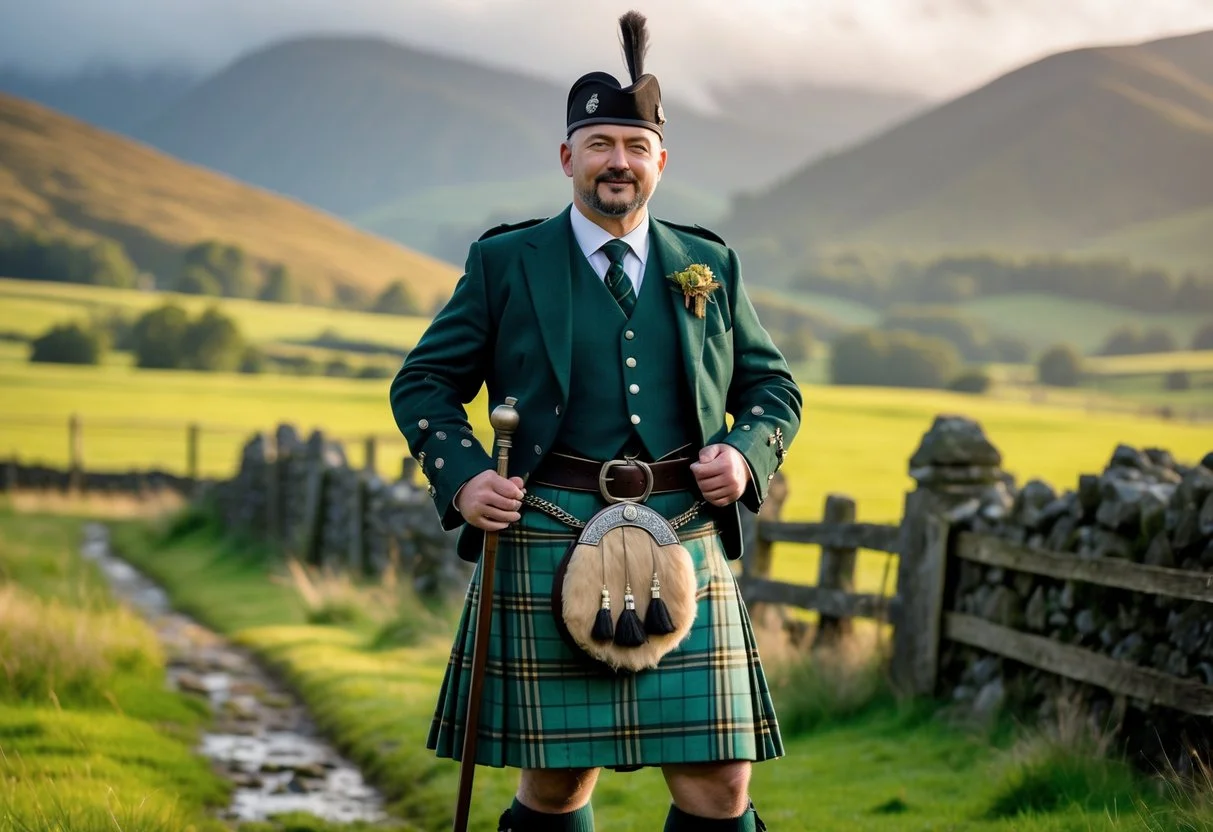
The Great Kilt is more than a simple piece of clothing; it is a token of amazing Celtic history and Highland Scottish appreciation and of Highland heritage. Great Kilts served a practical purpose for Highland warriors and, with the passage of time, became a symbol of Highland defiance and cultural solidarity through the suppression of Scottish culture.
The Great Kilt is an essential emblem of Highland appreciation and of Scottish culture. It is used for clan ceremonies and gatherings. Also, these are the reasons why the Great Kilt is a symbol of Scottish pride.
Changes in Fashion and Modern Wear
The great kilt has morphed into many of the modern-day style kilts, as newer generations appreciate tradition and history, even if it is not seen these days. It has changed from casual attire to a part of formal wear in Scotland.
Today’s kilts are shaped and less ornate than the grand kilt. This also makes them more comfortable when worn at formal occasions and Highland games or other cultural events.
Accessories for Wearing
Kilt Belt & Buckle: While they serve the practical function of securing the kilt, they also allow for personalisation. Often leather and metal, they may connote your clan and also your individual styling.
Kilt Pin: An accessory of modest size, it is pinned to the front of the kilt. These have additional grading and usually host Scottish symbols or family crests.
Sporran: This traditional pouch held at the waist can serve the personal function of carrying belongings and also provide style to complete the look.
Kilt Hose & Flashes: This is also comprised of woollen socks and includes bold coloured flashes or garters. These provide elegance and keep the kilt secured.
Key Occasions for Wearing this Kilt
Weddings: Kilts are worn at weddings, embracing Scottish culture, worn by the groom, groomsmen, and guests.
Clan Ceremonies: At clan gatherings, a kilt is worn to portray the family, and their stockings signify their clan.
Highland Games: Kilts are worn during the Highland Games by competitors and audience members to celebrate Scottish culture.
Formal Scottish Events: Anything from a Burns Night to a ceilidh entails a kilt to formal Scottish culture, and elegance at the function.
Frequently Asked Questions
How does one wear Highland dress formally?
On formal occasions, the Great Kilt is customary wear with a coat which typically goes by the name of Prince Charlie or Argyll Jacket.
Sewn around one end of the kilt to make a pocket, the sporran is worn in front; another accessory is a small knife called a ‘sgian dubh’ that fits into the sock.
Men the tailoring ranges from the incredibly formal to true Highland casual; see below. Men usually wear knee-high socks and ghillie brogues (lace-up shoes).
How can you pleat a kilt in different styles?
Kilts are also pleated in either “knife pleat” or “box pleat”. Knife Pleats: All knife pleats run in the same direction, resulting in a sleek and uninterrupted line. Box pleats are a combination of inward and outward folded pleats, which give a more uniform pattern.
The Great Kilt is crafted from a single big piece of cloth, which uses an atypical pleating method to create the volume and flexibility.
What is the historical significance of tartan patterns?
Tartan designs are associated with Scottish culture, with each pattern referring to the country of origin of the fabric. Every design has its corresponding distinct colours and patterns that represent the wearer’s heritage. The tartans now represented loyalty to and pride in the clans.
What should I wear with a kilt other than what is suitable for a wedding?
The Great Kilt, or modern kilt, is sometimes worn at weddings with formal accessories (a jacket, a waistcoat, a sporran and a sgian dubh). The men normally wear a tie or bow tie in the clan tartan or in one of the wedding colours.
What is the origin of the feileadh mòr?
The feileadh mòr, or Great Kilt, originated in the Scottish Highlands during the 16th century. It was made from a single long piece of woollen cloth, wrapped and pleated around the body.
It served as a practical garment for warmth and protection from the weather.