
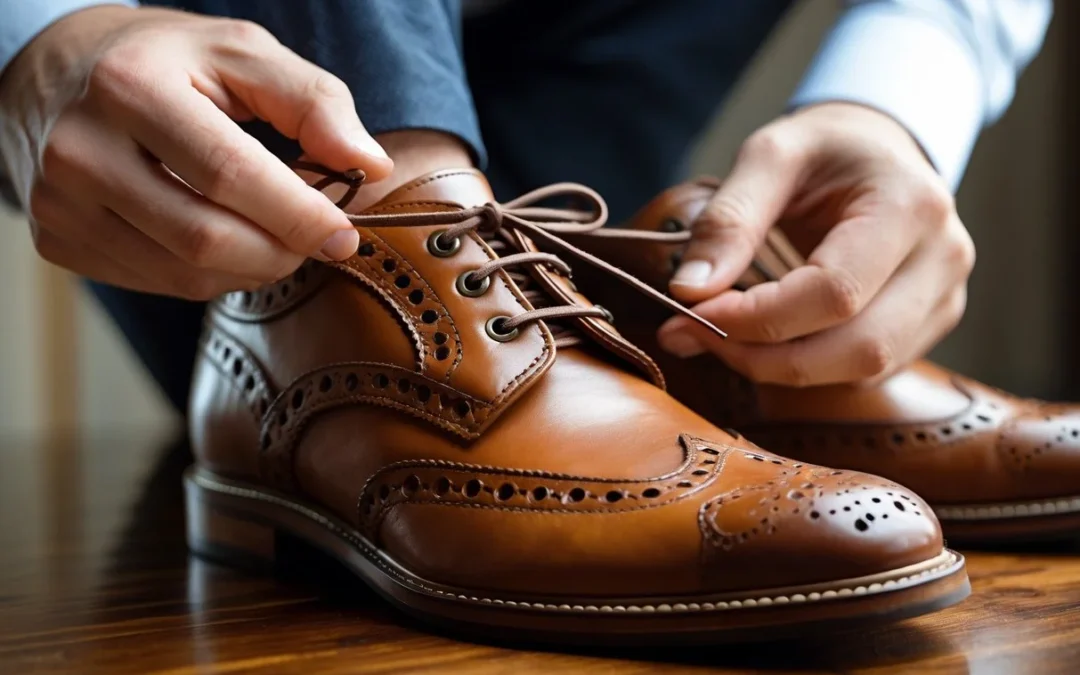
(For Illustrative Purposes Only)
Getting the laces on ghillie brogues tied right is the secret to that classic Highland vibe and, just as important, to all-day comfort.
You pull the laces snugly, loop them around the ankle, and finish with a tidy knot at the front, side, or back-whatever feels best for you.
Do it that way, and the laces stay put while the shoes show off their signature look.
Unlike ordinary footwear, ghillie brogues have long laces that wind up the calf instead of feeding through metal eyelets or sticking fast with Velcro.
Because of that twist, the tying routine changes and is important for how the shoes work and appear.
Mastering the process keeps the laces from slipping during a day on the hills or a dance floor and spares you the hassle of constant re-tightening.
Understanding Ghillie Brogues and Their Lacing System
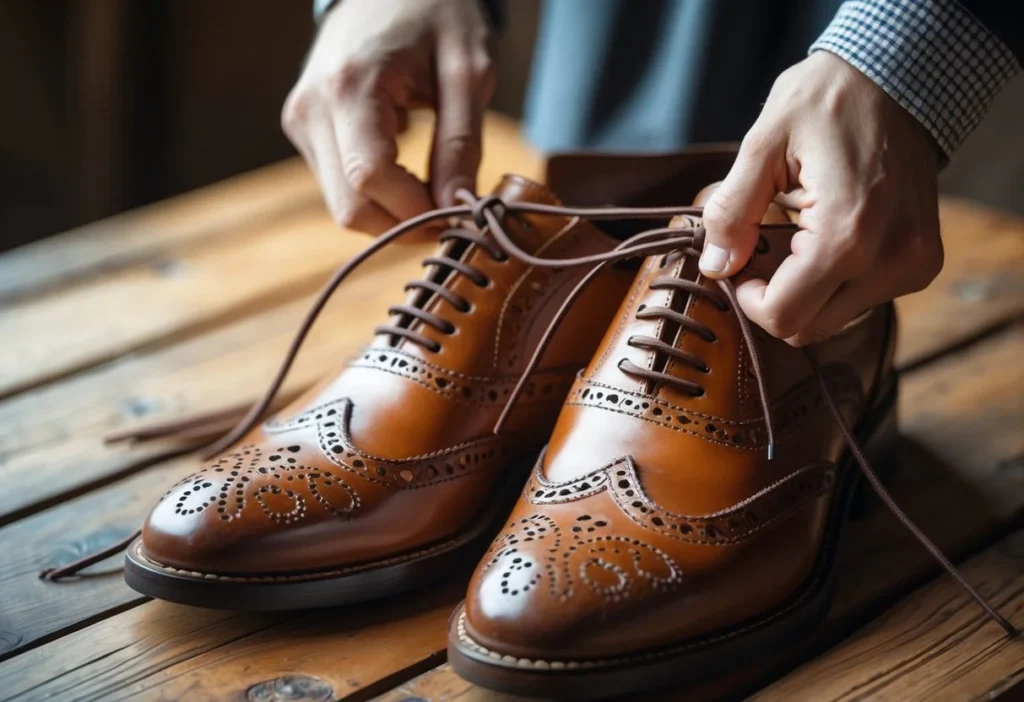
(For Illustrative Purposes Only)
Parts of a Ghillie Brogue
A ghillie brogue consists of several distinctive components that set it apart. Across its toe lies an ornamental perforation, called brogueing; these tiny holes serve as the hallmark of the style.
Unlike most shoes, the ghillie brogue lacks a separate tongue. The resulting opening lets long laces spiral around the ankle or even the lower calf.
Its sole, crafted from either leather or rubber, is sturdy enough to withstand outdoor use. Eyelets for the laces are arranged in pairs along each side.
What Sets Ghillie Brogues Apart
Ghillie brogues are distinctive mainly due to their unique lacing pattern, often called the ghillie lacing system. Unlike ordinary footwear, these shoes forgo a tongue and feature notably longer laces that climb higher on the foot.
Because of this construction, the laces travel across the instep, then wrap several times around the ankle, sometimes lacing to the calf.
That tight binding keeps the shoe anchored during vigorous activity, whether on rocky trails or dance floors.
The resulting crisscross design also gives ghillie brogues their signature appearance.
Types of Laces Used
Ghillie brogue laces differ from standard shoe laces chiefly in length and composition. They are cut longer so the cord can loop several times around the leg.
Commonly, laces are made from durable cotton or leather. Both materials resist stretch under load and survive rugged wear.
Leather, in particular, offers a classic finish that complements the history of the shoe.
These laces are either round or mildly oval, a shape that helps them pack tightly and resist unwinding. That characteristic retention of tension keeps the boots fastened comfortably as the wearer walks.
Step-by-Step Guide: How to Tie Ghillie Brogues
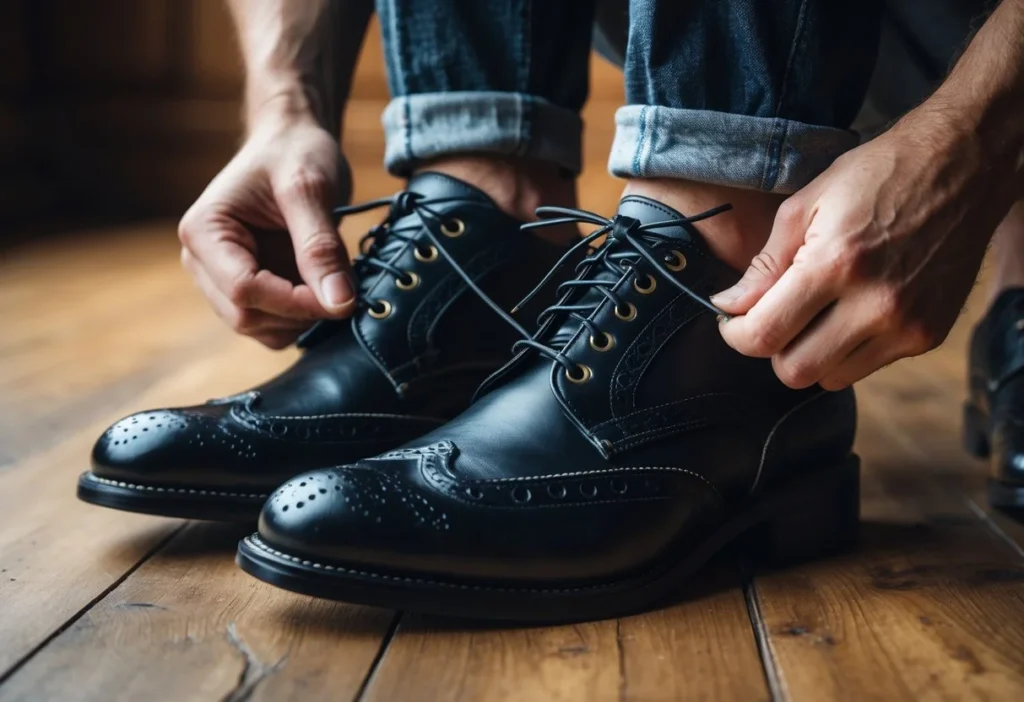
(For Illustrative Purposes Only)
Preparing Your Kilt Shoes
Before lacing, clean and dry the brogues thoroughly. Hold the shoe by its heel, lay the laces flat, and untangle any twists. Ensure each side shows the same length of lace. This symmetry produces a tidy knot and an even, comfortable fit.
As the shoe is slipped onto the foot, check that the tongue area seats properly; many ghillie brogues lack a formal tongue.
How to Lace Ghillie Brogues the Right Way
First, guide each end of the lace evenly through the outside eyelets. Cross the two laces in a tidy X as they rise through each hole.
That classic crisscross keeps the shoe close without locking it stiff.
Pull the laces firm, but leave enough slack to wiggle toes. If the laces bite, they pinch; if too loose, the shoe creeps off.
After the last eyelet, wrap each lace around the ankle twice for a secure finish.
Traditional Methods and Finishing Touches
Once the foot is fully wrapped, the wearer crosses the laces over the front of the ankle and ties a snug yet easy-to-wear bow or square knot.
The surplus lace ends may then be tucked under the band or left to drift, a choice guided by personal taste or the formality of the moment.
This is a great move that preserves the classic silhouette while keeping the ghillie brogues locked in place with every step.
Periodic adjustments to lace pressure and knot tightness throughout the day also ward off slippage and refine overall comfort.
Frequently Asked Questions
How do I lace a pair of ghillie brogues correctly?
First, pull the laces so they sit even on both sides. Feed them through the eyelets in a crisscross motion, leaving enough length to wrap around your ankles.
Cross the laces over the foot and wind them gently around each ankle, locking the fit with a firm knot. This old-school trick gives the shoes their classic style and keeps them snug all day.
Could you walk me through tying laces on Highland footwear?
Slip the shoe on, then draw the laces tight enough to feel secure but not pinching. Carry the long ends across the front, then loop them above the ankle so they sit flat against the leg.
Finish with a sturdy knot that won’t slip during a ceilidh, and check the laces lie straight to keep the look clean. Small adjustments now save you from fuss later on the dance floor.
What is the time-honoured way to fasten kilt shoe laces?
Tradition says to place the knot at the front, side, or even the back of the exact spot is still debated. Whichever location you choose, make it tight enough to hold yet loose enough to slide off easily after the last band finishes.
Some folk like the knot at the side so the front of the ankle feels free. The real trick is keeping the laces snug yet letting the foot move without fuss.
How are ghillie brogues worn with kilt socks?
The laces sit on top of the kilt hose. Then they spiral firmly round the leg, treating the sock as part of the shoe.
Just make sure those laces don’t bite into the skin and that the socks don’t slip out from under the wrap. When done right, the look is pure Highland flair.
Is there a special way to fasten ghillie-laced shoes?
You bet. Once the laces hug the ankle, a quick twist or double knot will stop them from creeping loose as you walk.
Gripping the ends tight while you tie helps lock everything down. Follow this and you can stride about all day without stopping to retie.
How is the lacing on ghillie brogues different from that on ordinary brogues?
Ghillie brogues come with long, trailing laces meant to twist up the ankle, while regular brogues use shorter laces that tie neatly across the shoe.
Because they lack a tongue, the lacing sits higher and looser, letting air move freely and letting the boot bend with each step.
The wrap-around cords also nod to the old Highland style, giving the shoe a look that is both showy and handy.