
(For Illustrative Purposes Only)
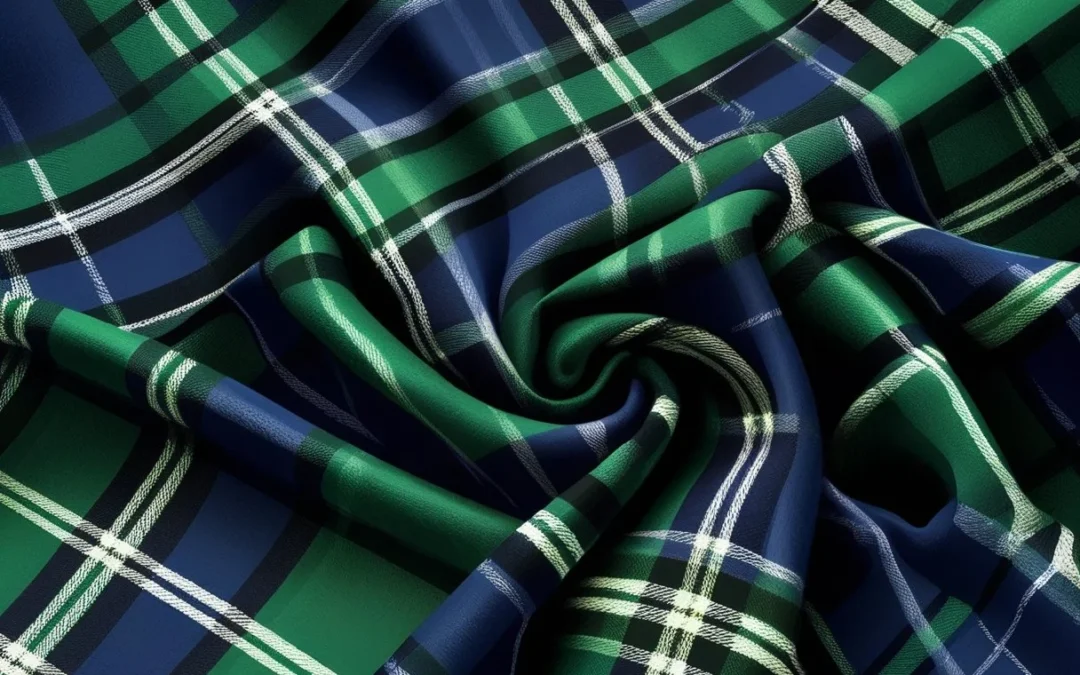
The Anderson tartan is an easily recognised check that denotes Clan Anderson, a Lowland Scottish clan. Its long story is tied to people prominent in Scotland’s public service and legal trade.
The pattern, marked by bold lines and colours, encapsulates the clan’s identity and enduring heritage.
Most people identify the Anderson tartan by its distinctive colour palette and specific thread count, which are officially recorded, even though the cloth lacks a credited designer or documented birthplace.
Today, it appears on garments and household furnishings, serving as a badge of pride for those who trace their roots to Scotland.
Studying this pattern thus provides a window into the clan’s place within Scottish culture and history, appealing to anyone interested in national traditions or personal genealogy.
Further explanations of the design and its symbolism are available from the Scottish Register of Tartans and other heritage websites.
History and Origins of the Anderson Tartan
(For Illustrative Purposes Only)
Development of the Anderson Clan Tartan
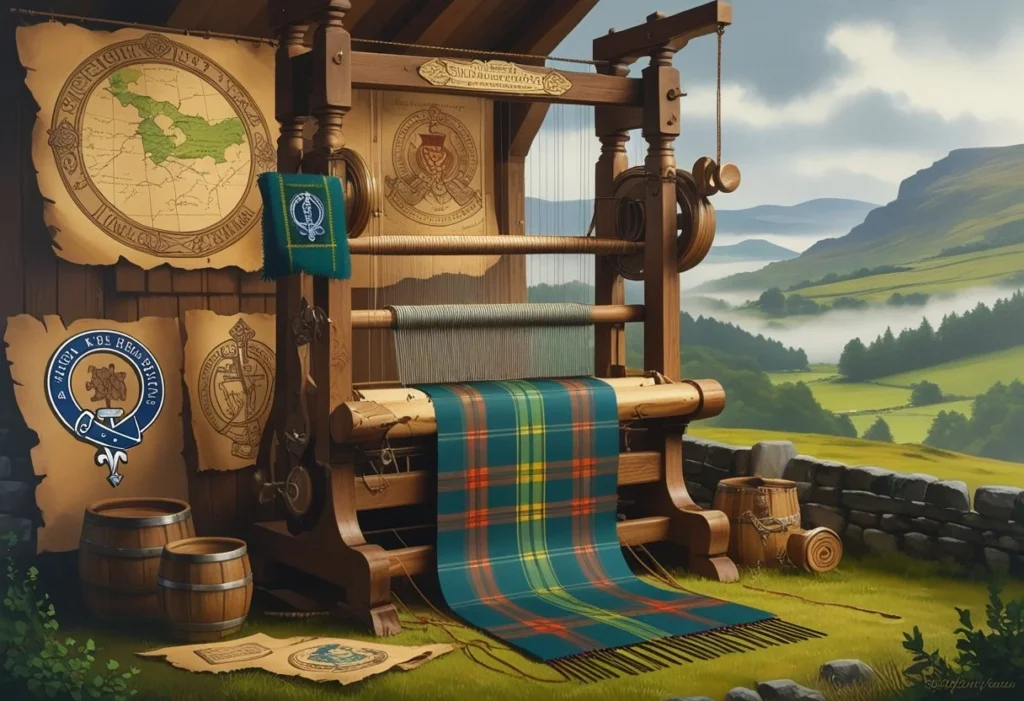
The Anderson tartan arose as a visual badge for the members of the Anderson family and their wider clan that once settled in the Scottish Lowlands. Distinguished by its seven hues, it stands apart from most other tartans that typically rely on six or fewer colours.
The extra shades can be managed only on looms made for more complex weaving. Intermingled greens, blues, reds, and yellows form a bright design that unmistakably signals allegiance to the clan.
During the 18th and 19th centuries, tartan regained popularity as distinctive patterns emerged and came to represent Scottish pride. These shared designs deepened a sense of kinship among Anderson descendants and others linked to the clan.
Significance in Scottish Heritage
Beyond its woven pattern, the Anderson tartan carries deep cultural meaning. The design recalls the clan’s historical links to legal and civic duties in Scotland. Clan members once shaped the nation’s affairs, leaving their mark on law and governance.
Donning the tartan thus pays respect to that legacy and affirms a bond with Scottish heritage.
It also features prominently at contemporary occasions- weddings, Highland games, or public gatherings- where people proudly display their clan in formal attire.
The motto associated with Clan Anderson, “Stand Sure,” often appears alongside the tartan, symbolising steadfastness and loyalty. This ethos deepens the tartan’s meaning for those who wear it.
Distinctions Between Ancient and Modern Anderson Tartan
The Anderson family supports both old-style and newer tartans. The older, ancient design shows gentler, muted hues that imitate the plant-based dyes spinners once used.
Its palette leans toward softer greens and navy blues that blend rather than shout.
By contrast, the modern tartan boasts sharper, brighter colours that make the pattern pop under daylight or flash. The shift simply traces better chemical dyes and a fashion wish to be noticed.
Core lines and blocks remain identical in both cases; only the spirit of the tones parts them. Wearers pick one or the other to match mood, occasion or even local weather.
Styles, Fabrics, and Uses of the Anderson Tartan
(For Illustrative Purposes Only)
Traditional Anderson Tartan Kilt
The Anderson tartan kilt stands as an important emblem of the clan’s proud history.
It is cut from medium- to heavy-weight Scottish wool, woven on home looms to guarantee true authenticity.
The cloth pairs deep forest green with skyline blue and thin black bands, producing a striking, harmonious pattern.
Anderson kilts appear at formal ceremonies, Highland games, and clan meets alike.
The pleats at the rear swing wide, framing the tartan with each movement. Skilled tailors preserve the classic cut but allow minor adjustments so wearers move with ease.
Anderson Tartan Plaid and Fabric Varieties
Anderson tartan cloth consists chiefly of wool, yet it can be woven in several distinct patterns and weights.
A medium-weight fabric is the standard choice, ideal for traditional kilts and tailored jackets. Lighter sheers suit scarves and dress shirts, whereas a heavier yardage performs well for upholstery and rugged outer garments.
Branded as plaids, these broad rectangular panels may be draped across the shoulder or pinned at the chest.
Their dual function is worth noting, for they lend flair to an outfit while providing welcome insulation on chilly days.
Popular Garments and Accessories
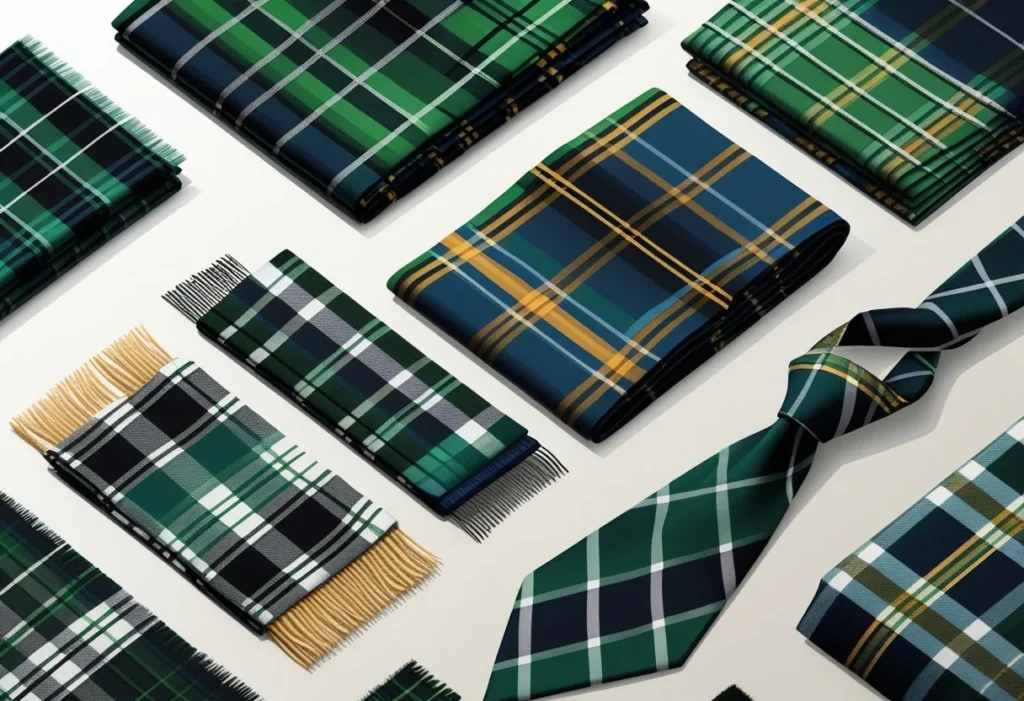
Beyond kilts and plaids, the Anderson tartan now appears on skirts, ties, scarves, and hats. Wearers, both male and female, rely on these pieces to express clan loyalty without drawing excessive attention.
Such accessories appear regularly at gatherings and in casual, day-to-day outfits.
The same pattern adorns bags, waistcoats, and even upholstery textiles. Artisans usually craft these goods from premium, pure-wool cloth woven in Scotland.
Modern Fashion and Global Influence
Once reserved for clan gatherings, the Anderson tartan has stepped into global style. Today, designers weave it into jackets, dresses, and everyday outfits.
Their update merges the old pattern with fresh lines and modern fabrics.
Ongoing fascination with Scottish culture keeps the Anderson tartan in demand.
Online boutiques and speciality weavers now provide bespoke pieces, so admirers everywhere can sport kilts or small accessories in their family’s pattern.
Frequently Asked Questions
What are the official colour specifications for the Anderson ancient tartan?
Anderson’s ancient tartan is woven in gentler hues than the modern set; it features pale green, soft blue and cream and looks noticeably calmer on the eye than its busier sibling.
How can one distinguish between the Anderson modern and ancient tartans?
Because the modern version relies on deeper, bolder tones- test deep bottle green and navy- while the ancient keeps things faded and light, the two patterns are fairly easy to tell apart.
What types of garments are commonly made using the Anderson tartan fabric?
Enthusiasts and clanspeople order kilts, scarves, ties and even tailored jackets in the pattern; turn to everyday accessories like caps, sashes and slimmer neck-wear for a subtler link to the cloth.
Where can one purchase a kilt in the Anderson tartan design?
Reputable Scottish outfitters, either online or along the High Streets of Edinburgh and Glasgow, carry the fabric; stores such as Tartan Vault and the Scotland Shop routinely stock authenticated bolts with matching made-to-measure service.
What are the appropriate occasions to wear an Anderson tartan tie?
An Anderson tie fits easily into both formal and semi-formal wardrobes, appearing at weddings, clan gatherings, civic parades and any ceremony where a nod to heritage is welcome.
Yes, several versions designed specifically for scarves and shirts merge the classic tartan with contemporary textile techniques.