

(For Illustrative Purposes Only)
Scottish emblems symbolise Scotland’s story of the past, present and future.
They are such familiar symbols as the Saltire flag, the thistle, and the unicorn. These emblems represent centuries of history that tie people to Scotland’s history and traditions.
The top Scottish symbols are symbols of pride, fortitude, and a rich cultural history that stretches back hundreds of years.
Each symbol represents something about the past and values of Scotland, from bravery to resilience.
Knowing these symbols can give you a deeper sense of Scotland beyond simply taking in its natural beauty.
They’re part of everyday life, from kilts to flags, attesting to how tradition still counts. Discover more about these potent symbols and what they mean in Scottish culture.
Significance of Scottish Symbols

(For Illustrative Purposes Only)
History and Origins of Scottish Symbolism
There are so many different symbols of Scotland that go back hundreds of years, based in ancient Celtic times and going into the medieval period.
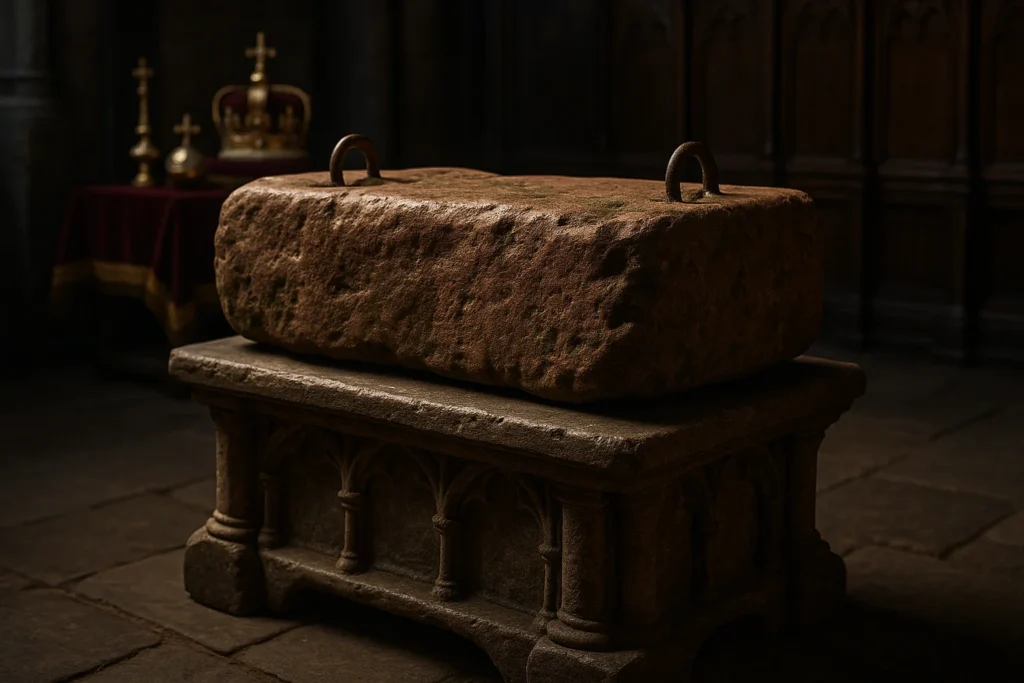
For instance, the Stone of Scone is a traditional emblem of Scottish kingship: it is also known to have been used when crowning a king.
The stone was carried off by King Edward I of England in 1296, but it still serves as a potent symbol of Scotland’s royal might.
Spirals and knots in Celtic design represent both religious and nature-based beliefs in eternal life.
These old Scottish symbols and meanings reveal how the ancient Scots interwove the various aspects of life with the land and the heavens.
National Symbols of Scotland
Numerous national symbols are used in Scotland to represent the nation as a whole.
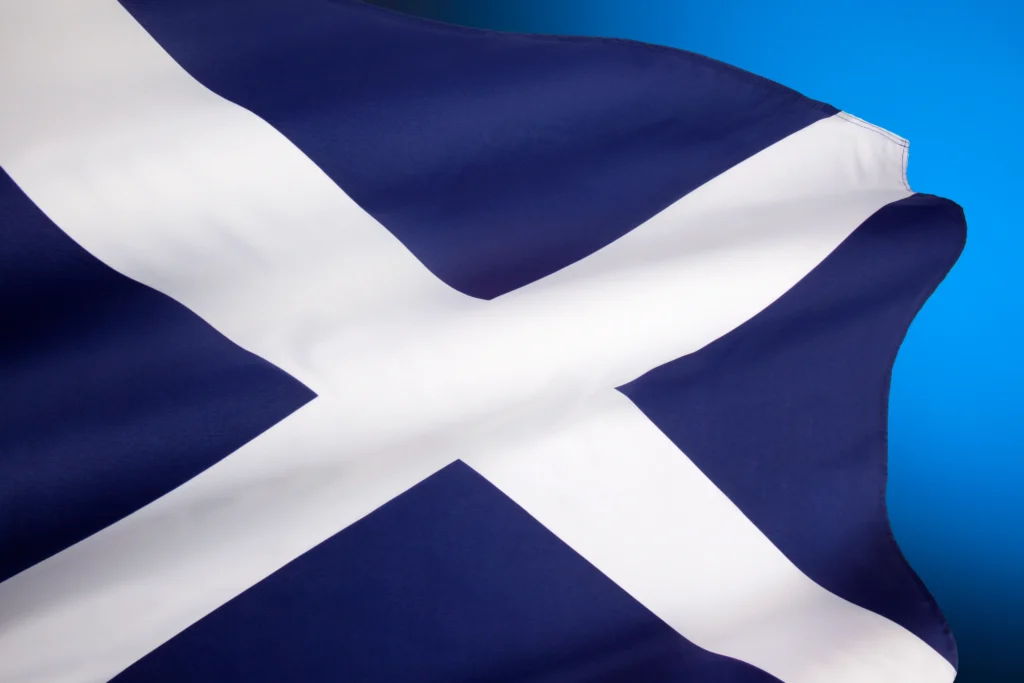
The Saltire (or Saint Andrew’s Cross) is the national flag of Scotland. It represented the country’s patron saint and is a lasting emblem of Scottish identity.
The Scottish Lion Rampant is also a central symbol, once employed by Scottish rulers. It signifies bravery and power.
The Celtic Cross is a Christian symbol, with the Christian cross and perhaps a circle or ring inscribed upon a stone or drawn in rock art.
The symbol is characteristic of Celtic art, but it also shows the influence of the pre-Christian past in so much of Scotland’s religious history.
Traditional Meanings and Uses
Scottish symbols are not decorative; they are emblematic, and there is a meaning and a role behind the tradition.
For instance, the thistle symbolises protection due to the legend that suggests the prickly plant saved Scotland from being invaded.
Celtic cross and knotwork designs are found on jewellery, wedding cups (quaichs), and grave markers, representing belief and kinship.
Tartans and clan badges often feature numerous symbols that express familial heritage and allegiance.
Notable Scottish Symbols and Their Meanings
1. Saltire (St Andrew’s Cross)
(For Illustrative Purposes Only)
The Saltire is a sharp, white, diagonal cross on a deep blue background, one of Europe’s most ancient and iconic flag designs.
Legend holds that when the Pictish King Óengus prayed to Saint Andrew that his troops would have a victory over the Angles in battle, on the morning of the battle, white clouds forming an X shape were said to have appeared in the sky.
According to various records and stories, a white saltire in the form of the cross of St Andrew on a blue background was in the sky at dawn, inspiring the king and his army to victory (Sergeant 4).
Officially declared in 1385 by the Scottish Parliament, the flag became the “field sign” (used in battle as an identity and rallying point) both before and behind soldiers, using expressions like “field sign”, “national flag”, and “heritage symbol”.
2. The Thistle

(For Illustrative Purposes Only)
The spiky, purple thistle of Scotland represents vigilance, protection, and tenacity.
Many legends explain how the thistle was chosen as a national emblem as far back as the 13th century.
A barefoot Norse invader had his hopes of a stealthy attack on the Scots dashed when he stepped on a thistle and howled in pain, alerting the defenders.
This plant guardian was adopted as a formal badge by Alexander III and was later modified as the Order of the Thistle.
3. The Unicorn
Majestic, mythological, and uniquely Scottish, the unicorn has been the national animal since the 12th century.
It was originally introduced on the coat of arms of King William I, representing purity, innocence, and noble authority.
The unicorn could purify water, too, according to Celtic belief, a symbolic action relating to sovereignty, healing, and moral authority.
It was later chained, representing the union between the wild spirit and the royal discipline.
Common search terms like “mythological unicorn heraldry”, “national animal”, and “chained unicorn” all serve to highlight its role in the imagery and nationhood of the Scots.
4. Lion Rampant (Royal Banner)

(For Illustrative Purposes Only)
DESIGN OF THE ROYAL STANDARD The Lion Rampant The ancient Royal Banner of Scotland, the Lion Rampant, is still widely used for various purposes in Scotland. It dates from King Alexander II in 1222, with additions by Alexander III.
This mythical beast is closely associated with the rallying cry “Nemo me impune lacessit”, or in Scots, “Wha daur meddle wi’ me?” None dares offend me with impunity.
While its official use is limited to royalty, the Lion Rampant is still a proud and powerful symbol of the courage, independence and tradition of Scotland.
5. Stone of Destiny (Stone of Scone)
(For Illustrative Purposes Only)
The Stone of Destiny (or Stone of Scone), a yellow sandstone slab, was once a symbol of state, used to crown monarchs at Scone Abbey in Perth, where it had sat in the medieval era.
Its English conqueror, Edward I, seized it in 1296 and installed it beneath the Coronation Chair at Westminster Abbey, where it stayed in use for hundreds of years.
Scottish students briefly took it back in 1950; it was officially returned to Scotland in 1996 and came out of sideshow retirement to be employed in Charles III’s coronation this May.
Frequently Asked Questions
What do ancient Scottish symbols mean?
Many ancient symbols in Scottish heraldry represent the country’s history and faith. There are many, such as the Celtic Knot, which represent eternity and unity. Others express national pride and identity, like the Saltire or the Lion Rampant.
What is the representation of Scottish icons in tattoos, and what do they mean?
Scottish symbols in tattoos generally speak of personal heritage and power. Popular patterns include thistle (for strength) and Celtic knot-work (for unity). The tattoos are a link, a connection, to a Scottish heritage and belief system.
What are the Scottish symbols used as a token of love and affection?
Scenarios associated with love: Burns night haggis and a type of Celtic knot, inspired by Robert Burns These are symbolising the Scottish way of love from ages past and forever.
Can you introduce the significance of warrior symbols in Scottish history and culture?
Warrior emblems such as the Lion Rampant are symbolic of strength and protection of the native soil. They remember the battles Scotland has fought and the grit to defend the independence of the nation.
What are a few classic Scottish symbols of good luck?
Symbols such as the unicorn and some Celtic crosses are believed to be lucky or to offer protection. These are the symbols which mix historical and religious messages about protection and success.
What does the thistle symbolise in Scotland?
The thistle is for strength and defence. Its prickly demeanour and references to defending Scottish land and perseverance have made it a symbol of national pride. Further information can be found at the national Scottish emblems.