

(For Illustrative Purposes Only)
The Macdonald Tartan is a unique pattern which signifies one of Scotland’s oldest and most significant clans.
It has several different versions, each corresponding to a different branch of the clan, but all have the same basic pattern based on historical records.
The Macdonald tartans represent the rash and dominant legacy of the eagle and linchpin Lords of the Isles of Scottish fame.
But this tartan is more than a pattern; it is a way to keep people connected to their family, their heritage and Scottish culture.
Some versions are taken from 15th-century manuscripts, such as those of the MacDonald of the Isles, indicating that the patterns have survived the ages.
To correctly interpret the differences between these tartans is to discover a great deal about the story of the clan and its many septs.
Who Are The McDonald’s?
Origins: Somerled Norse-Celtic Heritage, “Children Of Donald”
The Macdonald clan traces its roots to Somerled, a warrior king of the 12th century who joined Norse and Gaelic cultures.
This Norse-Celtic compound formed the foundation of the Macdonald clan culture, mixing languages and traditions.
The surname Macdonald, with its variants such as Mcdonell, Macdonell and McDonald, comes from the Gaelic description of “Children of Donald”, in honour of Donald, son of Somerled.
This demonstrates their family relationship and the clan’s origins in the Scottish Highlands and Western Isles.
Historical Power: Lord Of The Isles, Branches, Global Diaspora
From the 13th century, the Macdonalds also held the influential title Lord of the Isles, which entitled them to control aspects of western Scotland.
This power was strategically significant in dominating many naval passages and native clans.
The clan eventually split into several branches, including MacDonald of Sleat, Clanranald, and Glencoe.
All of these branches seized various Highland territories to illustrate the extent and power of domination which the clan possessed inside the Highlands.
Today, the members of the broader Macdonald family are spread across the world.
Their legacy is still visible today in nations such as Canada, the USA and Australia, where they maintain Scottish traditions.
Tartans Of The Macdonald Clan
(For Illustrative Purposes Only)
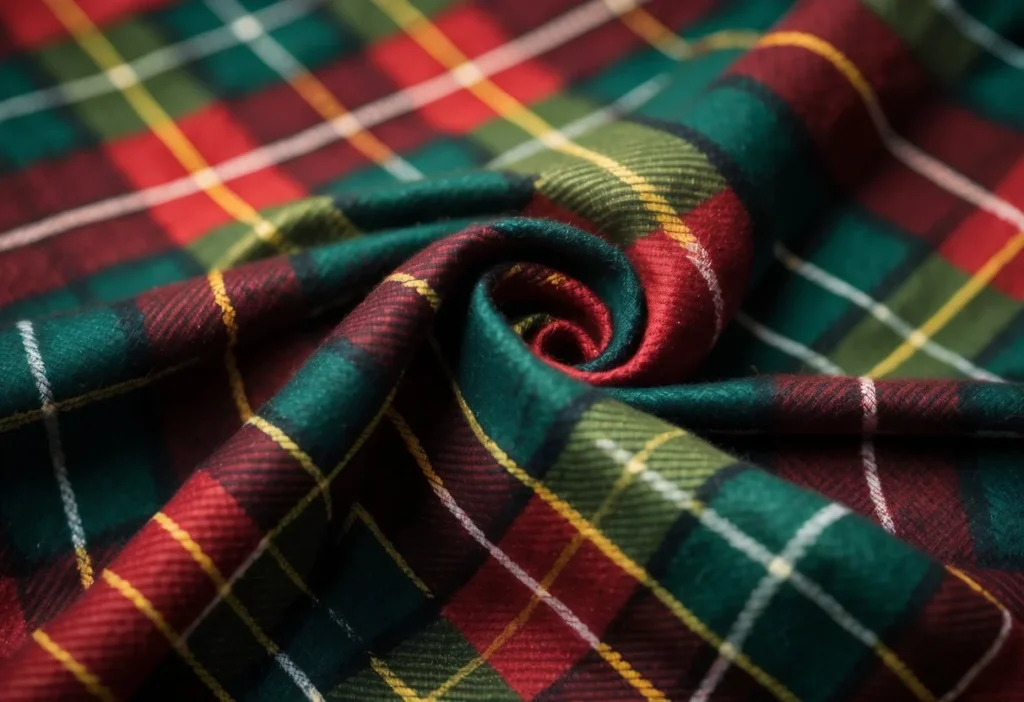
Overview: Over 40 Tartans Tied To Main Branches
There are over 40 associated tartans with the various branches of the Macdonald Clan. These, in turn, represent the historic, new, hunting, and dress tartans worn by various clan members.
Each of the nine independent branches of Clan Donald has their specific tartans or “setts”.
Traditionally, the head of the MacDonald clan determines which tartans are genuine. and also the MacDonald of the Isles branch, of particular importance.
Main Tartan: MacDonald Of The Isles – Origins (Vestiarium Scoticum, 1842)
The principal tartan for MacDonald of the Isles is taken from the Vestiarium Scoticum, a work which was a copy of much earlier manuscripts and first published in 1842.
This tartan has long been regarded as the typical pattern attributed to the powerful sept of the clan.
The design is characterised by wide green and red bands with narrow yellow, black, and white stripes.
The green and red, symbolising the clan’s land and its warrior spirit, do most of the heavy lifting.
Historical Development Of The MacDonald Clan Tartan
(For Illustrative Purposes Only)
Early Use: Symbolic, Practical Origins
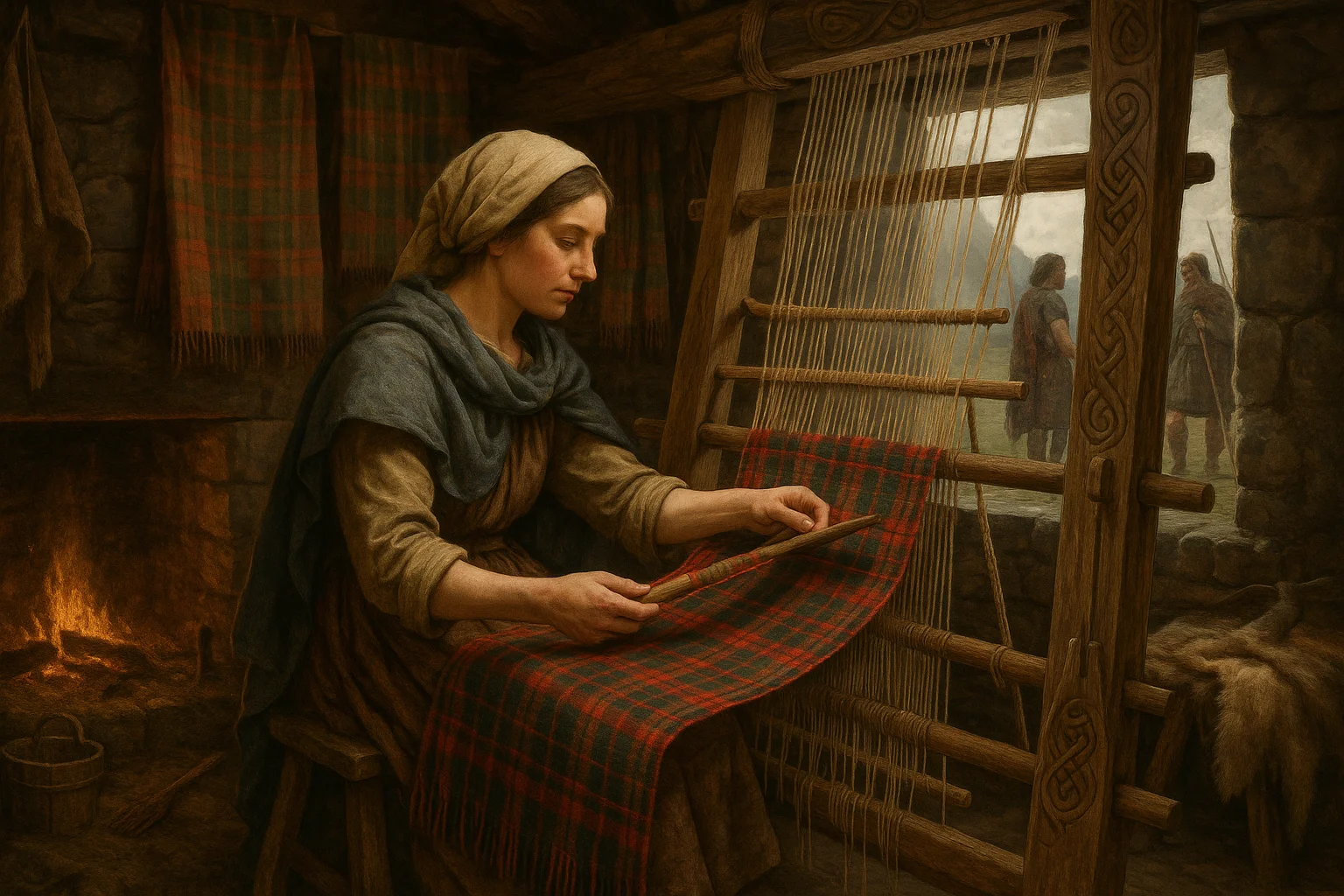
Tartans used to be functional in the old days. The tartans of the Macdonald clan were primarily rugged clothing for life in the tough environment of the Highlands.
Patterns in the wool of these items helped identify what family a person belonged to (these items were like clan identification).
Clan tartans were not an original feature of Scottish clans but were rather derived from the wider Scottish provincial tartans, with Highland clans using particular tartans as early as the 18th century.
It was only much later that the concept of the clan tartan would be cemented, but different branches of the Macdonald clan, Glengarry and Keppoch.
Vestiarium Scoticum’s Role (1842) & Its Controversies
The publication of the Vestiarium Scoticum in 1842 contributed to the popularity of tartan and the Macdonald tartan in particular.
Its illustrations displayed particular clan tartans, which affected the public’s mental image and doubtless early records of the trend.
The Vestiarium, however, has been contentious. It is disputed by many historians, as it combined real historical patterns with imaginative or invented motives.
This tended to blur lines between genuine clan tartans and those devised in the Victorian period.
MacDonald Tartan Variants By Branch

(For Illustrative Purposes Only)
Sleat, Clanranald, Glengarry, Keppoch, Glencoe, Antrim
There are various branches of Clan Macdonald, each of which has its own accepted tartan design.
The Sleat tartan is from the north and associated with the Isle of Skye and tends towards darker colours with muted reds and greens.
Bright green and red are the predominant colours, and they relate to the West Highlands and South Uist, respectively, in which the clan has influence.
The Glengarry colour combination is a nice blue and green with pops of red.
How Tartans Connect Branches To Clan Unity
Though distinct, all Macdonald branch tartans have common colours and combinations.
These visually link each branch back to the larger clan, representing unity and common blood.
Popular colours such as red and green repeat through several tartans, encouraging clan loyalty.
Donning a branch-specific tartan reflects a pride in local heritage while also acknowledging one’s place in the broader clan family.
Clan Symbolism & Identity
(For Illustrative Purposes Only)
Crest: Hand Holding Cross Crosslet, Motto “Per Mare Per Terras”
The clan crest of the Macdonalds is depicted as an armoured hand holding a cross crosslet.
It is this symbol of faith and strength which connects the clan with its mediaeval ancestry and warrior ideals.
The motto “Per Mare Per Terras”, which translates to “By Sea and By Land”, reflects the clan’s ability to make do and to thrive.
It refers to their dominance over both the mainland of Scotland and the islands.
Colours And Pattern Symbolism
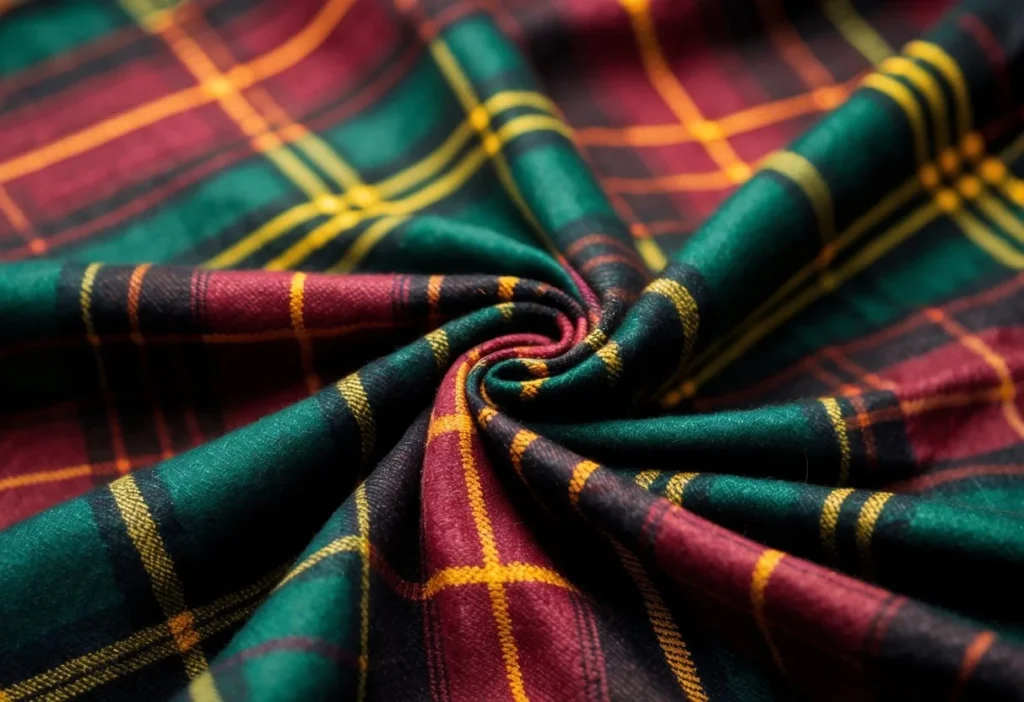
The Macdonald tartan features specific colours arranged in a distinct pattern. Green, blue, black, and yellow stripes combine to create a design known as the MacDonald Lord of the Isles tartan.
Each colour has meaning:
Green: symbolises the Highlands’ natural landscape.
Blue: reflects the sea, which is important to MacDonald’s history.
Black: represents strength and resilience.
Yellow: provides distinction and honour.
Together, these colours illustrate the clan’s connection to both land and sea.
Stories & Battles That Shaped The Clan
(For Illustrative Purposes Only)
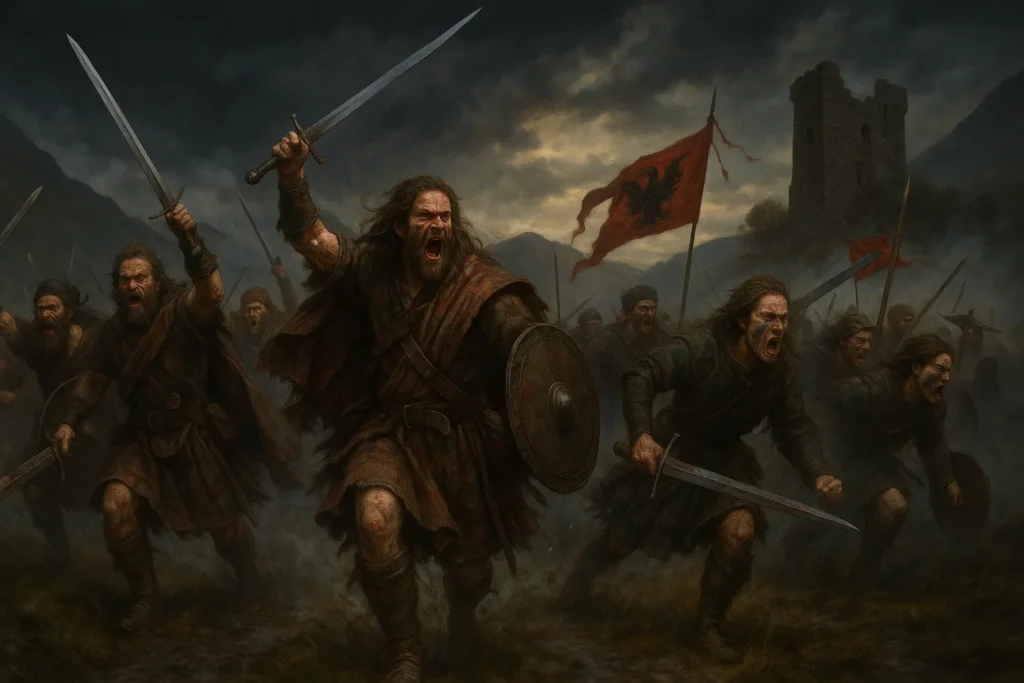
Key Events: Battle Of Bloody Bay, Eigg Massacre, Glencoe
The Battle of Bloody Bay c. 1480.
The Battle of Bloody Bay, a bloody naval battle fought off the coast of Scotland, involved two factions of the Macdonald family. It kneecapped their power but left its mark on clan rivalries.
During the Eigg Massacre of 1577, MacDonald forces killed the MacLeods when the islanders refused to surrender. This incident heightened the hatred of clans towards each other.
In 1692 was the killing of MacDonalds by government soldiers who had accepted their hospitality. To the clan, it still is a major symbol of betrayal and suffering.
Which Tartan For Which Branch?
The Macdonald Clan is divided into several branches, each with its own tartan design.
| Branch | Tartan Features | Notes |
| Macdonald of Clanranald | Dark green with red and blue stripes | Known for its rich, deep colours |
| Macdonald of Sleat | Bright red and green, with thin black lines | Often associated with the Isle of Skye |
| Macdonald of Glengarry | Dark navy blue with red and green checks | Used by the Glengarry regiment in the 18th century |
| Clan Donald (main) | Red and green with black overcheck | The most widely recognised Macdonald tartan |
Different branches choose tartans to reflect their history and territories within the clan.
Is McDonald’s Of The Isles The “Original”?
The MacDonald of the Isles branch descended from Somerled, a 12th-century Norse-Gael warlord.
They are sometimes known as the “original” McDonald’s because so many of the clan’s lines descend from this figure.
The branch was very prestigious, as the Lords of the Isles had ruled over large areas of the west of Scotland for centuries.
Other branches have grown apart, but Macdonald of the Isles has always held the central place in the clan history.
Frequently Asked Questions
What are the main colours of the original MacDonald tartan?
The main MacDonald tartan has deep reds, greens and blacks. These colours form a bold pattern that is now symbolic of the clan’s lineage.
Can you explain the MacDonald clan crest and its meaning?
The hands of MacDonald hold a cross and are crowned. This is the emblem of loyalty and faith as well as the badge of the clan, signifying their honour and pride throughout Scottish history.
How does the original MacDonald tartan differ from the modern tartan?
The ancient MacDonald tartan applies a softer and muted palette with a more subdued appeal. The new version is lighter and splashier, with brighter reds, clearer lines and the kind of stylish graphic exuberance that has evolved with the clan’s tastes.
Are there many different McDonald tartan patterns?
There are many McDonald tartans. These include several patterns associated with different branches of the clan, such as the MacDonald of Clanranald and the MacDonald of Sleat.
Where can you buy McDonald’s tartan material?
Fabrics with the MacDonald tartan design are available for sale from specialist merchants. If you like to shop online, places like ScotlandShop have plenty of choices in Macdonald’s of a piece goods!
What does the MacDonald clan motto mean in history?
The MacDonald clan’s slogan translates to, “My hope is constant in thee.” It is an act of trust, of faith, that underlines the Clan’s strength and steadfastness over centuries in their ways.